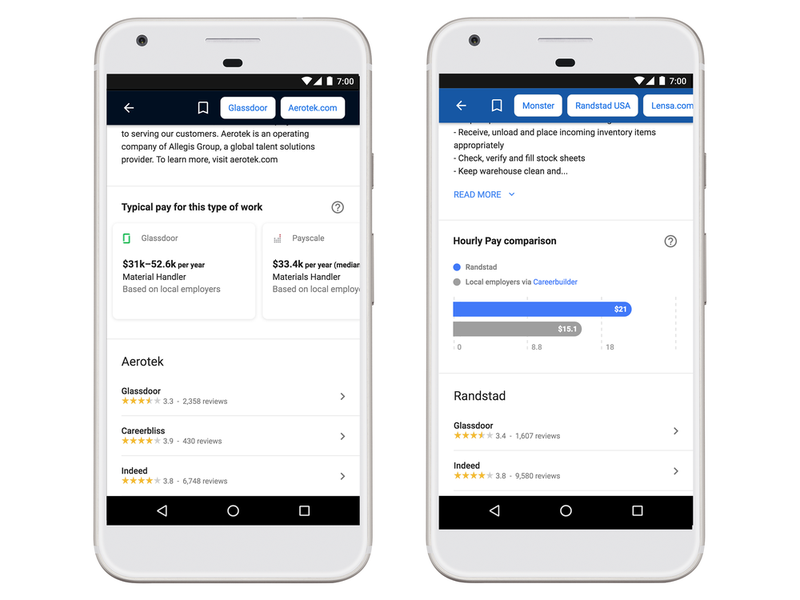
Use Google for Jobs Service

Use the Google for Jobs for Service web site to search for your next job.


via lifehacker. "The job-hunting service is integrated into Google’s search engine, so you can look for gigs in the same seamless way you search for celebrities’ ages, or for terminal diseases based on your symptoms (it’s just a cold). It also attempts to fill in the blanks on a glaring omission in nearly 85% of all job postings,according to Google: an actual salary."

Bad Resumes have these 4 things in common

1. Not enough numbers
Numbers are easy for humans to digest and absorb their meaning. So add 20% more numbers to your resume.

2. Bad formatting or too long
Use a template and shorten it up. No one cares about 15 years ago when you delivered pizza's for a month in the summer. What have you done for me lately?

3. Your relevant skills are too hard to find.
If you are applying for a temp accounting job... highlight your accounting experience. See above about filling your resume full of pizza jobs.

4. Your resume is suspiciously vague or boring.
It only takes one sentence to state that you graduated from college. not a paragraph. and most likely, your college experience does not have relevance to the application.

Brag on Your Resume (it is ok)


Unless you have someone referring you to a potential employer, you will need to toot your own horn. Here are some way to make it easier to read.


1. Numbers are useful, so include some. In fact the lack of any numbers is a major red flag.  35% of the people who read this will add a number to their resume.

2. Use a template for your resume. No need to flounder around by yourself, when you can google a template. Include some details that are flattering to you

3. Use key words (hopefully the same key words as in the job you are applying. Resumes are reviewed and scanned by computer programs, prior to getting to a hiring manager.

4. Include shortened executive type summary of skills and benefits of hiring you. This will be read by the hiring manager. Remember you only have 30-45 seconds to make an impact.


Surviving Group Interviews

Group Interviews are challenging ... ok they suck.

The reason is that you are being scrutinized by multiple people at the same time.

Tips,

1. Be Yourself
2. Always answer honestly, which really means admit when you don't know something.
3. Engage everyone
4. Smile and relax

Either you get an offer, or you get experience. 

What to say when you don't have an answer


1. Acknowledge you can’t answer their specific question. 
2. Lay out a related skill or experience. 
3. Ask if they’d like to hear about the skill or experience you do have to share.

Show You Appreciation for an Interview

https://www.themuse.com/advice/how-to-gracefully-turn-down-a-job-offer


Step 1: Show Your Appreciation

A heartfelt—and specific—thank-you for that time and effort will go a long way.

Step 2: Give a Good, Brief Reason

The best approach is to be brief but honest about your specific reason for not accepting the position, saying something like: Thank you at this time I do not think this position is a good fit for me and my family.

Step 3: Stay in Touch

Send a thank you note to everyone

5 Ways Employers Prefer to Hire

5 Ways Employers Prefer to Hire:

Image result for 5 ways
(image Redmond Magazine)

1. From Within the Company

The scenario described above is the most preferred way to fill a position. Ideally, companies like to have someone on hand who can fill a role quickly and with little fuss. Is it fair to the unemployed and other job seekers outside the company? No. But companies only have one thing in mind when making hires: finding a safe bet. Who could be safer than someone the company already has on the payroll? Not only are hiring managers already familiar with the abilities – and inabilities – of existing employees, but promoting from within also builds goodwill in the company. An employer that promotes from within is a good employer. This makes hiring from within a win-win scenario.

2. Employee Referrals

Employers like hiring through referrals because employees tend to only refer people in whom they are confident. Employees don’t want egg on their face if their referral doesn’t work out. Even if a family member catches wind of the role, the employee won’t refer them unless they believe that family member can really do the job. Yes, people will forsake their own flesh and blood to save their professional reputation. According to Jobvite, 40 percent of all hires come from employee referrals. This is even more stunning when you consider that referrals only account for 7 percent of all applications. One wonders why employers are even wasting their time on, say, job boards.

3. Through the Hiring Manager’s Immediate Network

If a hiring manager can’t find an internal or referred candidate, their next move is typically to reach out to people they trust outside the company, including former colleagues, partners, vendors, and even people who’ve left the company for greener pastures (boomerang employees). 

4. Through a Recruiter

If internal candidates, employee referrals, and external networks all fail, many hiring managers will then hire external recruiters. Recruiters can be pricey, so they aren’t a first choice for most employers, but they’re still palatable because of their industry knowledge and connections. Either way, the employer is paying for a few candidates to be delivered. It’s a risky proposition.

5. Advertising

When employers get truly desperate, they advertise their positions. There are two major problems with advertising a position publicly: cost and quality of candidates. In terms of cost, it’s not actually the cost of the advertising itself that concerns employers. For most companies, the time spent reading resumes and interviewing unqualified job seekers is what really bothers them. Even with advanced ATSs on their side, employers still run into many unqualified candidates who wrongly make it to the interview stage.