5 Ways to Fix a Tarnished Online Reputation

Original Post: From Alexandra Levit's


United Airlines recently released a statement in response to the YouTube video sensation by a disgruntled flyer who had his guitars broken on a recent flight.  However, it was too little, too late, as more than 3 million people had already watched the video.  If you're the owner of a small business or if part of your job is to look after your organization's reputation, you need to know what to do to avoid being in a pickle like United.  Here are five ideas from Larry Weber, the founder of communications firms Weber Shandwick/W2 Group and the author of Sticks and Stones:
  • Listen and respond to online conversations before an issue reaches critical mass and damages your reputation.  The best protection against negative comments and gripes is to build a positive reputation ahead of time. 
  • In the event of a crisis, you or your leader must take responsibility in order to recover corporate reputation.
  • Explain your solution to the crisis/issue and then carry the solution into action. 
  • Set up specific online destinations to solicit negative comments and deal with them separately.  Bank of America set up a Twitter rep to deal with customer complaints.
  • To change how you appear on the Internet, push down the relevance of negative results and give the search engines positive new content.

100+ Salary Surveys, Databases and Calculators From Around the World in 2009

Original Post: 100+ Salary Surveys, Databases and Calculators From Around the World in 2009 [Jobmob]


Use this list of salary surveys and other resources to prepare yourself for job offer and salary negotiations.

Salary Survey Money Face

How to use this list

  • The list only includes sites that are credible or that explain where their numbers come from.

  • Compare results across multiple sites for best results. Salaries are always changing and many of these sites are based on employee-submitted information.

  • If you know of any other resources that aren’t in the list, please
    suggest them in the comments below.

What’s in this list?

  • Salary surveys - numbers come from reader surveys about their jobs.
  • Salary databases - readers contribute information about their jobs, sometimes in exchange for access to the rest of the database.
  • Salary reports - more general, a salary report can come alone or from a combination of salary surveys, government statistics, company disclosures, etc.
  • Salary or wage search - search on a profession and the results will show typical earnings.
  • Salary calculators or checkers, wage/worth estimators - you fill out a form of questions about your profession and the calculated result is an estimate of the salary you should be earning. If you’re employed, this a good way to judge how fair your pay is.
Global Directory of Salary Surveys

Flag of Australia

Australia
  1. Hays 2009 Salary Survey & Guides - salary guides for many industries
  2. LiveSalary - anonymous salary information database of user submissions.
  3. JobSpeed IT Salary Surveys
  4. Australian Institute of Landscape Architects
  5. Olivier Group’s Finance and Accounting Salary Survey 2009 (pdf)
  6. Australian Institute of Mine Surveyors
  7. MyCareer salary surveys - by industry
  8. ARC salary and stipend rates for discovery and linkage for 2009 (pdf) - fellowships
  9. Robert Walters 2009 Australia Salary Survey (pdf) - all kinds of jobs
  10. Reed Specialist Recruitment’s Australia Salary and Labour Market Guide 2009 (pdf) - all kinds of jobs

Flag of CanadaCanada

  1. SalaryExpert Search
  2. Yahoo! HotJobs Salary
  3. Computerworld Canada’s 2009 Salary Calculator
  4. CTTAM 2009 Salary Survey (pdf) - all kinds of industries
  5. Board of Canadian Registered Safety Professionals (pdf)
  6. APEGS - engineers
  7. Ontario Public Accounting (pdf)
  8. ASET (pdf) - science & engineering professionals
  9. UBC Engineering Co-op
  10. Professional Engineers and Engineers-in-Training (pdf)

Flag of IndiaIndia

  1. JobeeHive - research salaries, sometimes even by company
  2. MBA Salary Survey
  3. Electronics Industry (pdf)
  4. Payscale
  5. SalaryMap - all kinds of industries
  6. eLearning and Content Development Salaries in India

Flag of IrelandIreland

  1. Robert Walters 2009 Ireland Salary Survey (pdf)
  2. Premier Salary Survey 2009 - Finance, Legal, Office Support, Technical and IT
  3. Brightwater Salary Survey 2009 (pdf) - many industries
  4. HR Salary Survey 2009 (pdf)
  5. Leinster Society of Chartered Accountants Salary Survey 2009 (pdf)
  6. 2009 Salary Survey Restaurants/Hotels
  7. Insurance & Reinsurance-Salary Survey (pdf)
  8. Top People Salary Survey 2009 (pdf) - many industries
  9. Reed Specialist Recruitment’s Ireland Salary and Labour Market Guide 2009 (pdf)

Flag of Israel Israel

  1. Jacob Richman’s CJI Hitech Salary Survey 2009
  2. Techshoret Salary Surveys - writers of different kinds
  3. CPS’s Hitech Salary Surveys (Hebrew)
  4. Ethosia HR’s Salary Surveys (Hebrew) - very complete.
  5. Check Compare (Hebrew) - a mostly-Hebrew database of user-submitted salary information covering many industries.
  6. Maskorot (Hebrew) - another Hebrew database of submissions, but with some features such as the 50 Highest Salaries by Position.
  7. Jobsindex (Hebrew) - links to salary surveys
  8. Council for Higher Education (Hebrew) - average salaries of students post-graduation, per university or college
  9. Jobinfo (Hebrew) - find the salary for a job in a few clicks
  10. Hilan Tech Salary Calculator (Hebrew) - calculate your Net (after tax) salary as far back as 2000

Flag of the Philippines Philippines

  1. JobStreet Salary Report - numbers for many professions.
  2. 2008/2009 CUPA-HR Salary Surveys
  3. HR Business & Employee & Analytics & Trends (pdf)
  4. Average IT Industry Salaries in the Philippines for 2009
  5. Employed Persons by Industry, Occupation, Class of workers, and Hours Worked

Flag of SingaporeSingapore

  1. JobStreet Salary Report - numbers for many professions.
  2. Robert Walters 2009 Singapore Salary Survey (pdf)
  3. Ministry of Manpower Wage Search
  4. Reed Specialist Recruitment’s Singapore Salary and Labour Market Guide 2009 (pdf)
  5. Headhunters.com Salary Survey (pdf) -all kinds of jobs
  6. Comments on numbers for Singapore in Hays Salary Guides 2009
  7. Executive and Non-Executives report (pdf)
  8. JobsCentral Salary Calculator
  9. Ambition Market Trends & Salaries Reports

Flag of South AfricaSouth Africa

  1. Robert Walters 2009 South Africa Salary Survey (pdf)
  2. MyBroadband Jobs -all listing include a salary range
  3. Advertising Agencies Salary Survey 2009
  4. 2009 Civil Engineering Salary Survey
  5. Accountants Salary Survey 2009 (pdf)
  6. Mba.co.za Salary Survey - (MBAs)

Flag of United Kingdom

United Kingdom
  1. Reed.co.uk’s Salary Calculator
  2. uk:recruiter’s Free Salary Survey List
  3. ITJobsWatch tracking system - very nicely done, lets you track salary trends per position.
  4. Research, Science & Academic Job Salary Checker
  5. MSN Money UK’s Salary Centre
  6. CWJobs’ Salary Checker
  7. Robert Walters 2009 United Kingdom Salary Survey (pdf)
  8. GAAP Finance and Accountancy - links to other industry salary surveys
  9. Michael Page Consultancy - all kinds of salary surveys
  10. IT salary survey: hard first quarter for 2009
  11. ILEX Bournemouth & District Branch: 2009 Salary Survey (pdf)
  12. The 2009 UK Games Development Salary Survey
  13. Corporate Finance Salary Survey 2008/2009
  14. Reed Hospitality Salary Survey (pdf)
  15. Legal Accounts Salary Survey 2009 - South Regions
  16. Parity Salary Survey 2009-Permanent IT Jobs - (pdf)

Flag of United StatesUnited States

  1. Glassdoor - submit your own first to see the information that other users have anonymously submitted about their companies.
  2. Realrates - not very nice to look at, but has user-submitted information that is (somewhat) verified by moderators.
  3. JobSearchIntelligence - salary calculator
  4. jobnob - search and compare salaries across companies and professions
  5. SalaryExpert Search
  6. CareerOneStop - credible information from a government source.
  7. JobStar’s 300+ Salary Survey Results
  8. Indeed.com Salary Search
  9. ComputerJobs.com Salary Ticker
  10. Robert Walters 2009 United States Salary Survey (pdf)
  11. Salary.com Resources

GlobeInternational

  1. PayScale - mainly a salary checker, somewhat long-winded forms but very detailed results for almost every country.
  2. Hays Salary Guides 2009 for Asia
  3. Robert Half Global Salary Survey: Accounting, Finance & Banking
  4. National Statistical Agencies - per country, many of which have salary numbers in your local language.
  5. SalaryExpert (international version) - only one position at a time can be checked.
  6. SalaryScout - search or browse salaries from around the world, such as via their
    interactive World Salary Map.
  7. WageIndicator - these “salary checks” are supposed to confirm if your current salary is fair.
  8. Vault.com Salary Surveys - a lot of employee-submitted information categorized by industry. Time-consuming to look through and you can’t search the submissions.
  9. Robert Walters Global Salary Surveys for 2009 - in addition to the above countries are covered Belgium, France, Hong Kong, Japan, Luxembourg, Malaysia, New Zealand, Spain and The Netherlands.
  10. Robert Half Finance Free Resources - a 2009 guide with “projected average starting salary ranges for accounting, finance and banking positions,” requires free signup.
  11. Salary Survey for Engineers - covers the United States, India, Canada, UAE, Singapore, the United Kingdom, Australia, Saudi Arabia, Malaysia, Qatar, Germany, Nigeria, the Philippines and Egypt.
  12. 2009 Randstad Remuneration Survey - accountants in New Zealand

Five Social Media Rules for Your Job Search

Original Post: Five Social Media Rules for Your Job Search

image Looking for a new job? Be smart online! Your activity on the internet may make or break your chances of getting a job you want. Too often people sabotage their job search by leaving a trail online of careless, controversial, or foolish posts, pictures, or comments. Others use their time online to create an image that screams “Hire me!”

Here are five rules to follow to help insure your success:

  1. Maximize your LinkedIn profile. LinkedIn is a tremendous tool for your job search, not the least of which is being found. Also, a recruiter or hiring manager may check you out during a hiring process just to see what you have posted. Spend time to create a full, professional profile. Be as meticulous as you are in creating your resume. Be sure there are no spelling errors and make it readable. Whether it’s to find you in a search, or to check you out as you’re being considered for a position, your LinkedIn profile is critical to give you an advantage when you’re competing for an offer.

  2. Picture this! Clearly, having pictures online that show you drinking, doing drugs, or something else foolish or worse can be deadly to getting an offer. However, often people forget that ALL pictures online form a portrait of who you are. I saw a LinkedIn profile of a middle-aged heavy-set man with a picture of an apparent vacation in Hawaii where he was shirtless and wearing a lei. Not the image a potential employer is likely hoping for. Pictures on Facebook, MySpace, Flickr or any other site are accessible, often even when you think they are marked ‘private’. If you put it on the web, it can usually be found. It’s public information and can be a factor in a hiring decision. Make sure the pictures online, particularly on LinkedIn create the best professional image you can.

  3. Avoid controversy. You may have strong opinions about politics, wars, healthcare, or a number of other topics. Airing them out publicly online, however, may alienate a potential employer. Whether the recruiter or hiring manager agrees with your opinions or not may be irrelevant if they consider the potential turmoil it may produce in their organization. Debate and discussion live and in-person is great, but anything posted online is open to public consumption now and years from now.

  4. Watch your language! Just as controversial subjects can be off-putting when being considered for employment, so can bad language. If your posts in a blog, ‘Tweets’ on Twitter, comments to articles, or discussion in online forums are characterized by profanity, or sexual references it’s not likely to create the image you’d like a hiring manager to have of you.

  5. Exude optimism! Complaining about your previous company, boss, current circumstances, neighbors, products, businesses, associates, or anything else creates an image of a whiner. Body language and tone don’t come across online. It’s critical to create an online persona of professionalism, helpfulness, graciousness, and optimism. If you read everything you’ve written online, would it sound like someone you’d like to spend time with each day, or someone that would bring you down? Create the impression that will make you an attractive employee and co-worker.

All of these things are not guaranteed to make a difference, however, if a recruiter or hiring manager were to Google you (and a high percentage of them do), what they find can be a deciding factor as to whether they will move forward with you or not.

Be careful to craft your online image and remember that EVERYTHING you post is open to consideration!

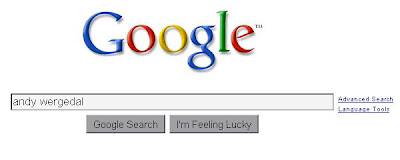
SEO your name - Google your name - Increase your page rank


If you google your name what do you find? If a potential employer googles your name what do they find? Below I will outline a number of ideas on how to increase your page rank in the Google search results. Before we delve into that topic I think it is important to get a refresher on how important search engines are to internet users.


1. Search Engines are the primary tool used to find links to information on the internet. In a recent survey 40% of all internet traffic goes to Google.
2. In order to get a high placement on Google's search engine you must understand how the Google search algorithm works.
3. Specific and strategic techniques can be used to elevate content to the first page of the search results.

All search engines work in a similar way, so we will just focus on the Google search engine. Bing, Yahoo, and Ask.com are a few of the main competitors to Google for English speaking internet users.

How does Google work? Google crawls every available web page and index's everything into a giant relational database. Then it ranks pages based on a number of factors...

Details from http://www.seomoz.org/article/search-ranking-factors

Top 5 Ranking Factors

  1. Keyword Focused Anchor Text from External Links
    73% very high importance

  2. External Link Popularity (quantity/quality of external links)
    71% very high importance

  3. Diversity of Link Sources (links from many unique root domains)
    67% very high importance

  4. Keyword Use Anywhere in the Title Tag
    66% very high importance

  5. Trustworthiness of the Domain Based on Link Distance from Trusted Domains (e.g. TrustRank, Domain mozTrust, etc.)
    66% very high importance


Overall Ranking Algorithm

Algorithm Elements
  • 24% Trust/Authority of the Host Domain
  • 22% Link Popularity of the Specific Page
  • 20% Anchor Text of External Links
  • 15% On-Page Keyword Usage
  • 7% Traffic and Click-Through Data
  • 6% Social Graph Metrics
  • 5% Registration and Hosting Data


So, we need to focus on keywords (your name) written multiple times in the title and body. This is common as the author of the posting or article is usually given credit a couple of times.

Here are 3 strategies that you can use to elevate the content that you desire people to find when they use google.

1. Use Linkedin (professional contacts) and Facebook (personal contacts) to connect with everyone you know and all your colleagues through out the world. The goal is to have lots of people link to you. (see ranking factor #1 and #2). Sign up for these free services, get out every address book you have and send everyone an invite.

2. Start a blog. One idea would be to publish tidbits that you find during your weekly reading or interesting ideas. People love to read and comment on these things. You only need to publish one 250 word posts per week, to make a huge difference.

3. Encourage your friends and co-workers to utilize these free tools (facebook and linkedin). Every link back to the your name or website will strengthen the hold on managing the on-line presence. Encourage your friends to write their own blogs and link to each other and you.

Consistency is more important than anything else. Follow these strategies each and every week and the search engines will display changes immediately and any noise content will be relegated to the back pages in 30-60 days.

Why Padding Your Resumé Doesn’t Impress Employers

Why Padding Your Resumé Doesn’t Impress Employers


view photostream Uploaded on August 11, 2006
by lseley


Have you ever heard of padding your resumé? It’s a term used when people exaggerate their experience on their resumés.

These are the types of people who get involved in school activities just to fill up the white space in their resumés.

My opinion is this never works to impress employers. As someone who’s recently assisted my current employer with university recruitment, I had the opportunity to look through about 60 resumés of students on my campus to fill one position.

For me, it’s easy to tell which students have really been involved and which students are merely embellishing. The students who were genuinely involved tend to have better experiences and skills listed, and can talk passionately about the work they do in an interview.

Who would you rather hire? The student who worked in a team to co-ordinate an event for over 500 students, or the student who simply attended?

My advice to job seekers is to only put something on your resumé if it is something that really exemplifies your personality and accomplishments. Make sure you put down things that you can talk about with zeal.

For example, stating that you are an “active member” of your local business students’ association is a bit of a stretch when your only involvement included attending a seminar and all you did at that one seminar was sit and listen.

Instead, you should include activities where you actually did something to develop your skills, such as participating in a networking workshop, or even planning one! These are the types of meaningful experiences employers look for.

Also, don’t worry about the size of the club or organization you are involved with. Often times, heavy involvement in a small club is far more valuable than occasionally attending events by a larger organization. Employers look for quality in resumés, not quantity.

The bottom line is you should focus on things you enjoy and if it happens to be something great for your resumé, then so be it. If not, then so what? You had fun and learned a thing or two along the way – that’s all that matters.

You Are Not Your Past

Original Post:You Are Not Your Past


view photostream Uploaded on April 25, 2008
by Kirpernicus


The place where the troops camp
thistles and thorns grow.– Lao Tzu


You are not the choices you’ve made.
You are not the child you once were.
You are not your failed marriage.
You are not the setbacks of yesterday.
You are not the bad things that have happened to you.
You are not your past.

The Past Guides Our Choices – It Doesn’t Make Our Choices For Us

Your thoughts or feelings about the past don’t change it. That’s what makes it the past.

Your future is not your past. Your future, right now, is a nest of possibilities. It only looks like your past if your present choices continue the inertia of the past.

The past guides our choices; we have real constraints, opportunities, and experiences based off of the past. Right now, though, those constrains, opportunities, and experiences are what they are – wishing they would be different doesn’t make them different.

Whatever happened, you are here. But being here doesn’t mean you have to stay here or that you will stay here.

Life is but an endless chain of presents and choices. You have never been your past.

What If You Stop Attacking Yourself?

What if you stop beating yourself up about what you did or didn’t do? Perhaps you’d see what you can do.

What if you stop wishing that things were different than the way they are? Perhaps you’d see how to move toward the future you want by using the bounty of the present.

What if you didn’t assume that past failures are who you are? Perhaps you’d believe, just for a second, that you could be successful.

What if you choose to let the past be the past? Perhaps you’d see the ripe possibilities of the future.

Every ounce of energy that you spend attacking yourself is an ounce of energy that’s diverted from your growth. We are finite beings; use your resources wisely.

The Resume is Dead! Again?

Original Post: The Resume is Dead! Again?

Did you ever see the 1975 movie Monty Python and the Holy Grail?

There is a scene where a man is trying to give the body of a live man to “the mortician”. The live man keeps insisting “he is not dead yet”. However, those around him say he is so close to dead you should just take his body anyway. This is clearly a parable for the resume.

I recently Googled, Is the Resume Dead? I was astounded by the number of people who have pondered this question, blogged about it, written white papers on it and identified the resumes “replacement”. In a few minutes of research I “learned” the traditional resume was going to be replaced by:

  • Video
  • Social Media
  • Blogs
  • Google®
  • Logical Employment Profiles
  • Personal Web Sites
  • LinkedIn®
  • Visual CV®

I stopped reading because my head was spinning. Stop the train

Let’s start with what a Resume is by definition. It’s a summary of accomplishments. That’s it, plain and simple. No matter how the hiring process changes, somewhere there must reside a summary of the job candidate’s skills that can easily be accessed by hiring managers. For practical purposes, it also must be down-loadable, up-loadable, and easily shared via both electronic and hard copy means. The resume may not be the document that opens the door for the opportunity, but somewhere in the hiring process, a resume will be requested.

Here is some perspective on the mediums that I “learned” will “replace” the resume.

Video and Visual CV -In essence each of these are attempts to offer some sizzle to a resume. Dress them up through technology advancements. Conceptually I agree that embedding graphics and video has great utility. However, the issue is that most Human Resource professionals and hiring managers will not take the time to view or review them. Generally speaking these systems of enhanced presentation will not work with the Applicant Tracking Software companies use to manage resume data. Over the past year, I have spoken with several hundred human resource professionals and recruiters. Not once, did I hear any of them suggest they would like to receive multimedia, in lieu of, or as an enhancement to a traditional resume. Numerous times I did hear candidates would be removed consideration if they did not provide traditional resumes. I also heard broad concerns about potential discrimination; including directly from a former Equal Opportunity Employment Commission chairperson. I recognize this argument against leveraging technology, may sound like a luddites response, but I am only reporting what the marketplace is telling me. I am definitely a believer in enhancing job candidate’s presentation materials, but it cannot come at the expense of having a traditional resume prepared and available.

Blogs & Social Media - Blogs and social media offer a great platform to demonstrate expertise. By their very nature, they also serve as great mediums to expand awareness of potential job candidacy and also accelerate networking. However, none of these benefits will replace the resume.

LinkedIn - Do you need a resume if you are up on LinkedIn? The quick answer is absolutely yes. LinkedIn’s template, does allow an individual to summarize their accomplishments, but it is not a transferable or up-loadable file, it is not graphically pleasing and it is rigid in construction. No doubt Linked In is playing an ever growing role in job search, but it is not a replacement for the resume. I have had human resource executives specifically tell me they are not interested in being provided links to LinkedIn profiles. They also may contain personal pictures which are prohibited as part of some companies hiring policies.

Personal Websites - Personal websites provide a much broader palate to present information about a job candidate. They offer candidates tremendous flexibility in describing their expertise, beliefs and accomplishments. They really can serve as a wonderful platform for expanded personal branding and the de facto centralized Internet location for the most complete and up to date information regarding an individual. They also can serve as a great delivery mechanism for a resume, however, like LinkedIn, they will not replace the resume.

Google - Google is the new resume. What a statement! I’ve heard it numerous times. So whatever the ever changing Google search algorithm returns when an individual’s name is entered into a search engine, now serves as your resume? This is preposterous. I’d hate to be named Brad Pitt, but not the actor. No one would ever see “my resume”. Online Identity Management is becoming critical in job search, but it is not replacing the resume.

Logical Employment Profiles (LEP) - There certainly is some movement in the taxonomy matching world. Think e-harmony. You fill out a form and it matches you to a job. Several new job boards and service providers are pushing this concept. I firmly believe it will work, but only for a small subset of the total positions people are looking for. Two of the early leaders in this market are My Perfect Gig for engineers and One Wire for finance professionals. I have no data to back up this next statement, but I have a suspicion, the candidates that are matched for positions by LEP’s, will still be asked for a resume even after the profile match.

Today, the resume is not dead, nor is it about to die in the near future. I would argue is not even sick. The resume remains the central document in an individual’s personal marketing for career transition.

Have your resume ready to go and make sure it is specifically targeted to the position you are applying for. If submitting to job boards, make certain you have embedded the proper keywords and tagged correctly for optimal search results.

There are many great job search and persona branding technologies and tricks to leverage. In this ultra competitive job market it is critical to utilize them all when personal marketing in a web 2.0 world!


Guest Expert:

Ian Levine is the founder of Career Brander. The Internet’s first personal marketing portal focused on individuals in career transition. Career Brander’s site includes software tools for creating resumes, instantly building personal career websites, financial planning calculators, professional business card printing, and proprietary content & links that aid and educate for a more effective modern day job search. You can read additional personal branding and career articles by Ian Levine on the Career Brander Blog.