Do You Know What Signals You're Sending at Work? - On Careers (usnews.com)
Do You Know What Signals You're Sending at Work? - On Careers (usnews.com):
3. What you wear. "Dress for the job you want, not the job you have" is an old saying for a reason. You might get away with wearing jeans and ratty shirts in your role, but if the people above you look more polished, you'll probably go further by wearing more business-like clothes. Fairly or not, people have an easier time picturing you managing others, doing higher-profile work and dealing with clients when you look polished and well put together. Rather than thinking of the dress code as telling you the minimum you can get away with, think of your work clothes as telling other people how you'd like to be perceived.
Don't Be This Kind of Interviewee - On Careers (usnews.com)
Sam the Salesman
Sam has been told that he needs to sell himself during the interview, so he's been practicing assertive, borderline aggressive, language. He is ready to go. The interviewer asks why he is interested in the job and without pause, Sam lists all his qualifications. His answer does not include anything about the job requirements, nor does he include any knowledge about the company's recent growth. His answers are so rehearsed, they sound slick. Mid-interview, Sam attempts to close the deal prematurely by asking "When do I start?"
The Fix: The interview is an opportunity for Sam to sell his skills, but he should pay more attention to the employer's needs and wants. Today's sales people are problem solvers and take a consultative approach. If Sam included how his skills and experience matched up with the job description, he would appear more interested. There is a fine line between being too pushy and confident. Rote answers come across as disingenuous. The best way for Sam to assert himself is by researching the company thoroughly and asking well-thought-out questions. If Sam was interviewing for a sales job, he should know to ask for the job at the very end of the interview.
11 Reasons Why You Should Never Get a Full-Time Job - Lifehack
9. You’ll Worry Less
Thinking about work when you’re not working means one of two things: either you really love your job, or it’s getting you down.
Full-time work doesn’t only stress your body; it stresses your mind, too. For example, worrying about work during your time off disturbs your sleep more than almost any other work-related factor. You’re much more likely to fret about work all evening if you’ve done nothing but work all day, so skip the full-time job and you can skip the worry, too.
11 Reasons Why You Should Never Get a Full-Time Job - Lifehack: 5 Strategies to Find a Job When You're Unemployed - On Careers (usnews.com)
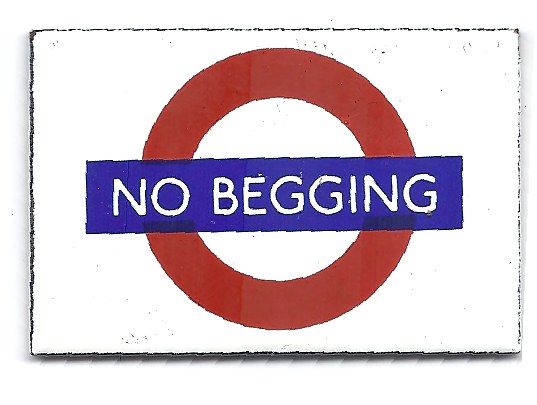
5. Don't come off as desperate (even if you are). This one is tough. The bills could pile up and your self-confidence badly bruise when you're not working. But, while you might need to have a little personal freak out every now and again, you should maintain an even keel when you go into a job interview for a prospective position. Few employers are drawn to candidates who are virtually begging.
If you spend your days refining your abilities and mending gaps in your skills, there's no reason why you can't meet a hiring manager with the confidence and poise of a man or woman with many options elsewhere.
Think of it like dating. You might have the worst slump of your life, but nonetheless, you have to play it cool when that special someone comes along, lest you ruin your chances of developing a relationship.
5 Strategies to Find a Job When You're Unemployed - On Careers (usnews.com)
Q&A: To Get a Job, You MUST Stand Out « ZipRecruiter Blog
Q&A: To Get a Job, You MUST Stand Out
Rachel Dotson — April 3, 2013
With an average of 100+ applications submitted to each job opening, it has probably never been more crucial to stand out during your job search. In today’s expert Q&A, Kevin Hungate teaches you how to do just that.
What is the typical approach to job search? How did we all end up with the same, cookie-cutter approach?
Here’s how the large majority of people approach the interviewing process:
Step 1: They submit their resume online and wait…hoping for a response.
Step 2: If they get an interview, they show-up ONLY with their resume and then wait passively for interview questions to be asked of them.
Step 3: For follow-up after the interview, only an email will be sent.
Job seekers interview in this manner because this is the way it’s always been done. It’s how our parents and grandparents interviewed (minus the email, of course). Also, this approach allows for the candidate to put forth the least amount of effort. Unfortunately, most job candidates choose the “easy interview path” not realizing that it differs greatly from the “successful & effective” one.
What is the problem with taking this approach? Is the problem bigger now given the current economy?
The problem with this approach is twofold.
First, companies want to hire candidates who display effort during the job interview process because it is indicative of the type effort they will put forth once they are hired. The traditional approach to interviewing requires minimum effort and this no longer flies in today’s competitive environment.
Second, with the large majority of job seekers utilizing the same interview approach, few stand out or separate from the crowd. It’s the job candidate who understands the power of differentiation who gets hired today.
This problem is compounded due to the state of our economy. It’s all about supply and demand. There’s a huge demand for jobs but fewer jobs available. Therefore, companies can choose the cream of the crop and it’s typically not the candidate who interviews as I described above.
Generally speaking, what can a candidate do to differentiate herself in a job interview?
It’s important to differentiate from the moment you submit your resume all the way through your follow-up.
Step 1: When you submit your resume, don’t simply rely on the online tool. Do some detective work and uncover the name of the hiring manager and/or an HR contact. Of course, I realize this is not always easy to do. LinkedIn is great for this. Once you have a name, express mail your cover letter and resume to the contact and include a business appropriate and relevant “accompaniment.” An accompaniment is generally a one-page insert that creatively and uniquely positions you for the job and allows you/your resume to standout from the crowd. (See example under next question).
Step 2: Create a presentation for your interview. This demonstrates great preparation/effort and allows the job candidate to drive the discussion and she becomes the one asking questions instead of sitting back passively waiting for questions to be asked of her. Typically 1-2 out of 10 job candidates will do a presentation. Therefore, if you are one of those two candidates, you immediately differentiate from 80-90% of our competition.
Step 3: Most candidates follow-up with an email. Therefore, you should follow-up with a handwritten letter which nowadays is extremely uncommon—thus the effectiveness. If the interview process stretches over a period of months, utilize what I call “next level follow-up.” This is not only the next step within your follow-up process but a method of follow-up that is incredibly memorable and impactful. (See example under next question.)
What about more specifically? Can we have a couple of examples?
A job seeker interviewing for a job at the Time Warner Foundation created a Time Magazine cover with a business appropriate candidate photo on the front along with a caption reading “Time Warner Foundation’s Next Great Addition: Time hires Jane Doe.”
This approach resulted in the candidate receiving a call from the hiring manager stating out of hundreds of resumes, she was the ONLY ONE to do something creative and thus earned the interview.
Step 3 Example (Next Level Follow-up):
A candidate had an interview at which the hiring manager stated he wanted to hire someone who was a leader and could orchestrate—“like a quarterback.” He actually stated “like a quarterback.” As follow-up, the candidate first sent a handwritten note. His “next level follow-up” was an autographed football that arrived weeks after the initial follow-up and included a note stating “In our meeting you said you wanted to hire a leader and orchestrator—like a quarterback. I look forward to being your standout QB.”
Sometimes standing out can be a bad thing. What are some things that job seekers should avoid during the interview?
In a job interview, standing out is only negative if it’s for negative reasons. If you don’t stand out—if you’re not memorable—you will have great difficulty getting a job ( « Tweet This ). Of course, the wrong follow-up idea, etc., can have a negative impact on your ability to get a job. If you stand out for all the wrong reasons, that’s far worse than not standing out at all. In everything you do, make sure it’s appropriate for the company culture and the job function as well as in-line with the hiring manager’s personality. It’s not always easy to assess appropriateness. Trust your instincts but don’t be afraid to be bold.
Is there anything else you would like to say about this topic?
Job competition is fierce and the interview process has evolved. Focus on two key principles:
- The power of differentiation
- Displaying above & beyond effort during the entire job interview process
As stated earlier, most candidates take the same approach to interviewing—which sends them down the “easy interview path.” Step off the “easy path” and onto the “effective” one. You’ll be amazed at the end result.
About the Expert:
Kevin Hungate is the author of “I Can Start Monday: Powerful Interviewing Tips to Take You Above and Beyond the Short List” and creator of one of the most comprehensive interviewing video series available. He is also an interview coach, public speaker and creator of a mobile app that provides job seekers with inventive ideas for follow-up after the job interview.
Q&A: To Get a Job, You MUST Stand Out « ZipRecruiter Blog:
'via Blog this'
How To Bounce Back Stronger After You Blow It At Work
BY DEBORAH GRAYSON RIEGEL , MARCH 8, 2013
Three strategies to manage disappointment when it shows up. Because, for better or for worse, it will.
Eight years ago, when I was just starting my coaching practice, I was thrilled to win a large, lucrative contract with an international advertising agency. Several days a month, I would train and coach staff from all levels of the company on presentation skills, management skills, and professional presence--a dream assignment. Business chugged along successfully for three more years, until my biggest and best client merged with another agency, and that agency had preferred vendors of its own. And I wasn’t one of them.
I suddenly went from a professional high to deep disappointment. In addition to losing a significant chunk of my income, I had lost my plans for the future with this client, the “luxury” of postponing business development, and yes, some of my pride. And while my business has more than bounced back since then, the sting of this disappointment is still a part of my consciousness.
Now, in retrospect, that blow to my ego and my bottom line wasn’t the worst thing in the world. It was the kick in the butt I needed to develop a thicker skin, more personal and professional resilience, and yes, a more strategic business plan than “pray that nothing changes, ever.” Nonetheless, in the moment, I felt like my professional world was crashing down around me--and that tomorrow would only look and feel worse.
Sound familiar? Whether you blew your big presentation, failed to land the account that you had “in the bag,” or got passed over for a promotion, you know what disappointment feels like. It sucks--it sucks our energy, our confidence, and our dreams. Disappointment itself has many cousins in the family of negative emotions (anger, fear, sadness) but it also has a unique formula, as highlighted by author Chip Conley is his New York Times best-selling book,Emotional Equations: disappointment equals expectations, minus reality.
In other words, disappointment shows up in the gap between what we planned or hoped for and what we actually got. Sometimes that gap is a small fissure, easy to manage and simple to bridge. Other times, that gap is a giant chasm, and it can feel nearly impossible to pull ourselves out. What’s distinctively difficult about disappointment is that we grieve for the loss we feel today while we have to reconcile that our plans for a particular future that we had envisioned are lost as well.
We all deal with disappointments of all shapes and sizes in both our professional and personal lives on a regular basis: like the “sure thing” client (expectation) who went with another firm (reality); like the book proposal that we labored over (expectation) that got rejected by seven publishers (reality), and like the love of our life (expectation) who decided to love someone else (reality…AND reality TV, sadly). But we don’t just have our own disappointments to deal with: We have those of our colleagues, clients, bosses, family, and friends to consider. And the way in which we handle (or don’t handle) our disappointments can expand or limit the ways in which we support others in dealing with theirs.
Here are three strategies to manage disappointment when it shows up, because, for better or for worse, it will:
Recognize that there’s no correct way or time to manage disappointment. You may want to find the bright side (“So what? Losing this client means we have time to pursue other, more exciting clients!”) while your boss or colleague chooses to sit with the darkness or fear for a while (“Losing this client looks bad for us. We’ve got to figure out how to spin this before it becomes a PR disaster”). Don’t feel compelled to pull someone out of their misery prematurely or to ask someone to tone down their Pollyanna approach that rubs you the wrong way. As positive as I tend to be, I have a strong, negative reaction to people who need for me to see the bright side before I’m ready to. Just take some space and give some space, and don’t force someone to see your perspective immediately.
Assume that you have something to learn from this setback. When I lost my big client, I realized that I had minimized the importance of creating a long-term business pipeline in order to maximize short-term profits. Yes, I was busy making hay while the sun shined, but I hadn’t planted the seeds for the following harvest. Now, I am constantly doing business development while I do income-generating work because that disappointment taught me a terrible and terrific lesson that I don’t want to have to repeat. Your disappointment might highlight some shortcoming in your business strategy, an inflated setup in expectations, a mistake in your assumptions, an error in judgment, or even a character flaw in yourself. Don’t waste the pain. Force it to yield you valuable personal and professional rewards.
Don’t shrink your goals to avoid future disappointment. The anger, sadness, and embarrassment that can result from a setback can be a huge deterrent to putting yourself back out there, professionally and personally, to do what you were meant to do and be who you were meant to be. Do you set an undersized goal for your annual sales so that you are all but guaranteed to achieve it? When your superstar staff member quit to take a bigger job elsewhere, did you replace her with someone less fabulous as a (hopeful) retention tool? Are you hanging on to a book proposal that you won’t share with agents for fear of rejection? When we set a low bar for ourselves as a way to feel safe and even victorious when we achieve those small objectives, we deprive ourselves, our companies, and the world of our excellence and brilliance. Now that’s the real disappointment.
Author Marianne Williamson wrote, “Your playing small does not serve the world.” The big pain of disappointment can lead to even bigger outcomes and opportunities if we’re willing to be patient with the process, do the hard work to learn critical lessons, and, yes, put ourselves out there again. And again.
--Deborah Grayson Riegel is a communication and behavior expert and president of Elevated Training Inc. and MyJewishCoach.com. She is the author of Oy Vey! Isn't a Strategy: 25 Solutions for Personal and Professional Success.
[Image: Flickr user Kenny Louie]
[Image: Flickr user Kenny Louie]
How To Bounce Back Stronger After You Blow It At Work | Fast Company: