Being Real Will Get You The Job, Seriously

Original Post: Being Real Will Get You The Job, Seriously


view photostream Uploaded on September 29, 2007
by Livsafe

My Masters course is finally over. Many of my classmates are into the job search in full swing now. To them, this involves a lot of time spent poring over multiple versions of resumes and CVs, enhancing or creating portfolio websites, polishing their LinkedIn profiles, and researching companies in the industry. The response I’ve gotten so far is fairly negative: no one’s had a solid lead despite numerous attempts.

A cause of the recession? I’m not too sure about that.

The Job goes to the Good Enough and Willing

Not everyone in my same class is in the same predicament, though. Those of us who currently have job offers (such as myself) found part-time or small project opportunities with our current employers while the course was taking place. It was a case of finding the person who could fill an immediate need, and being offered better opportunities as we proved that we were capable enough to handle the job.

One of my classmates, lets call him Joe, started taking up some simple jobs as a freelancer in the middle of the course, and this immediately opened up further opportunities as time went on. In fact, he even had to turn down a job offer from a major company because of time commitments. He did regret it but it was inevitable as they needed someone to start immediately.

He’s a good student, but not the best in the class, and neither is he as good as the other freelancers in the field. He was just responding to an opportunity seeing that he could afford to give up some leisure time.

The Job goes to the One Who Currently has a Job

They say a rolling stone gathers no moss. It’s hard to hire someone when you’re unsure about their track record. But making small sacrifices to gain the relevant work experience is one of the smartest things you can do to salvage a career that’s been halted or diverted by graduate school, a family emergency, a change of fate – whatever.

Joe was contacted by recruiters after they started noticing on LinkedIn that he actually was in employment and doing real stuff that real people do in real projects. Although he has sent out CVs to companies, he hasn’t heard back from a single one: “I dont have anything promising from sending around CVs yet,” he says.

This is from a person who has gotten 4 job offers, and had to turn down 2 of them in the last week. Joe’s problem isn’t about getting a job. It’s about choosing the right one. And it wasn’t a case of sending out CVs.

The Job goes to the One Who Knows How to Network (and not just to the one who does)

Joe’s fortunate situation happened when I recommended him to a senior freelancer (let’s call him Bob), who was looking for some immediate help. That was months ago. Today, because Joe has worked on real projects (short, small, but real) with real clients, he’s met a lot of real people in the industry. People call him by name, and knows him as the guy who has filled that role in a very short period of time and did a pretty good job. But more importantly, they know him as the guy who’s worked with Bob.

Another classmate I spoke to, let’s call her Susan, is planning to put up a portfolio site and print out flyers and business cards – the usual stuff. But only because she knows what it takes to “build her business”, i.e. getting contacts to notice your previous (but real) projects. A portfolio site is as useless as a CV unless you know how to make it talk. Making it talk is the skill of one who knows how to network, and not just someone who does.

In other words, going to an event, shaking their hands and having interesting chit-chat followed by a shove of your CV to their mailboxes isn’t going to cut it.

Unfortunately, the best way networking works is when you’re telling people about existing, current projects that you’re working on. Telling someone that you’re fresh out of university doesn’t sound very well to the ears of someone who has the authority to hire, unless they’re looking for fresh talent (which, in the case that he/she is hiring, that person might be looking to know who is better than you).

The Job goes to the One Who has had Real Experience, on Real Projects, with Real Clients

The problem companies have with university degrees is that there are a gazillion and one degree holders. Because it’s so hard to filter out the good ones from the not so good ones (read: the authentic ones from the not-so-authentic ones), there is a longer line, a longer wait, and more stringent recruitment processes.

As a freelancer if they ever have to deal with this, and they’ll tell you no.

Freelancers don’t wait in lines the length of football fields to find out if they can feed themselves in the next month – they simply can’t afford to do this. They need real opportunities and they’ll pick the best one out of three. They’ve learnt to accept whatever opportunities are available and make the best out of it, and plan for the future so that the next one hopefully leads to better clients and better projects.

The job market is still very much a hirer’s market. This is because profits drive companies, who influence the recruitment process. Choosing a job now is still much better than it was 50 years ago, but don’t assume that it’ll be easy. The good news is that there are a lot more types of opportunities for job hunters to get into:


  • short-term projects,

  • volunteering opportunities,

  • contributing to real projects like open source software

  • contributing to real issues offering real insight through channels like blogs and online communities (takes awhile to get there)

  • publishing work


You don’t get to pick the one you always want, but at least you’ll have choices, and you always will.

Strategy: Aim for the Middle, Work to the Top

In a recession, there is a trend for smaller companies to hire more. Smaller companies are more nimble, and they know where to find talent as good employers start getting retrenched from larger corporations. This presents a strategic opportunity that job hunters can seize if they want to get real experience, real projects, real clients, etc.

Strategy: Fill your LinkedIn profile to 100% and include Real Experiences

Recruiters started calling me up with job offers only AFTER my LinkedIn profile was up to scratch. It’s like a trust issue. It’s got nothing to do with the underlying system that LinkedIn runs on. The person who looks more authentic, and has real experience, gets the phone call.

Strategy: Spamming Companies Inboxes with your CVs – 80% quantity, 20% quality

I landed my previous job of four years ago after I selectively applied for 40 jobs. I only had 2 companies call back. Both offered me positions, and I took the best one. Don’t waste too much time applying for “the right job” – there isn’t one. Instead, aim for good companies – polish your CV to “good enough”, then send it along with a nice touch – e.g. an authentic email, a succinct but honest cover letter, whatever. Don’t trust your CV to do the work for you, though. It’s not a living document.

Strategy: Yes, Companies do read your Blogs. And yes, it does give off an Impression

Numerous times, I’ve been contacted by people who have hiring authority (CEOs, senior managers), and they remember me as this guy who runs this blog (www.leapwalking.com). I don’t know why, but I know that everytime I get an email from them, they use the email I’ve published on this blog’s About page, even though I’ve given them my personal email address. So, if you’re posting stuff out there, make it focused, make it real.


"

8 tips for building a strong presence on Twitter

Original Post:8 tips for building a strong presence on Twitter


In this post Twitter enthusiast Garin Kilpatrick shares his tips on effective ways to get more followers.

It is hard to put a price on a Twitter follower but the host of The Price is Right, Drew Carey, is offering to donate $1 to cancer research for every new follower he receives this year. The following eight tips will enable you to make the most out of your tweets and help you connect with as many followers as possible

1. Save your best tweets for the best time

Tweet your best stuff out during peak times, and you will maximize your retweet potential. The perfect time for retweets is right after lunch. Between 1 p.m. and 4 p.m. is when I usually get the most retweets. Fast Company recently published a post called Nine Scientifically Proven Ways to Get Retweeted which is where the retweet graphs below are from.

You need to consider, of course, the time zone your followers are in. The better you can make yourself aware of the timezone your followers are in, the better you can target your best tweets for maximum exposure.

2. Build retweeting relationships

With retweets it is often true that you get what you give. Whenever someone retweets something I post, for example, I try to scan their stream for something good to retweet in my stream. Many people miss out on retweets from me if they have a purely conversational stream. I have found that good quotes retweet quite well so I would recommend throwing one of those into your stream every 10-20 tweets. Juicy content like this blog post is also perfect for retweeting.

3. Follow reciprocators

Twitterholic allows you to quickly find the most followed people on Twitter. The top 1000 most followed people on Twitter are listed and you can see which people are reciprocators. A reciprocator is someone who will probably follow you back because they have about as many followers as they have people following them. Twitter Counter is another website that counts and ranks people on Twitter and they also offer widgets that will display the current number of people who follow you.

4. Automate tedious processes

Social Oomph offers several tools that allow you to tweet more efficiently. These free services range from scheduled tweeting (the site used to be called TweetLater.com), to the ability to automatically unfollow anyone who unfollows you, and the ability to automatically follow anyone who follows you. Saving time here will give you more time to spend finding cool people and building meaningful connections.

5. Build links to your Twitter page

The more links you have, the greater your potential to find new followers. Even a few simple links on other social profiles you already have will convert to several new Twitter connections over time. Facebook offers a “contact info” field specifically for links in the information section where you can put a link to your Twitter account, blog, and other sites on the web you might have. An app I use for Facebook is Web Profiles and I also developed a custom Facebook twitter badge including a button that links to my Twitter account.

6. Cross promote your networks

My most-commented-on Facebook wall post was when I simply asked who is on Twitter and what their username is.

7. Separate content from communication

Open up another Twitter account if it is relevant to do so. Working as a community manager for Eduify I have been able to build followers much faster by using two complementary accounts, @eduify, and @eduifyQuotes, as well as a third support node for discussion and replies, @askeduify. By having @askeduify I can reply to everyone who sends a message to @eduify without polluting that stream with replies that are only relevant to a few people. This strategy of separating content from conversation has worked for me and recently @GuyKawasaki (and @guysreplies) adopted this strategy as well. Having two accounts also doubles your daily follow limit so that you can push your growth even harder, if you want to do that.

8. Take advantage of #FollowFriday

Reward the people who retweet you the most by suggesting others follow them on Friday. Retweets are one of the best ways to find new followers and FollowFriday is my best method of building retweeting relationships.

If you take the advice from these eight tips there is no doubt in my mind that they will help you grow your following on Twitter, and you do not have to stop here. There are plenty of Twitter tips and apps that will help you learn about Twitter and how to tweet more effectively. A great place to start is the free Mashable Twitter Guide Book. Another cool site is TwiTip.com, which was started by Darren Rowse of Problogger fame.

Keep reading, keep sharing, and keep tweeting! (And make sure to follow @pingdom on Twitter.)

About the author:

Garin Kilpatrick is a community manager for the writing website for students, eduify.com. Check out his personal blog at Gar1n.com.

7 Ways To Schedule Future Tweets In Twitter

Original Post: Here by Keith Dsouza [techie-buzz]

Quite sometime back we wrote about ways to schedule and send emails in the future, however lots of things have changed since then and people are using as a mode of communication.

So what better way than to tell our readers about 7 services/applications that will help you schedule tweets in the future.

Interesting Read: Ultimate List of Twitter Applications and Services


Twuffer – Twuffer was developed for anyone who has a need to schedule pre-written, post-dated tweets, you can use it for different purposes, like tweeting hourly/daily/monthly announcements, running time based contests and so on.
AutoTweeter – A java based cross platform twitter desktop client that will allow you to schedule future tweets without using any external service.
Future Tweets – Future Tweets is a free service that lets you schedule your Twitter messages. Send it at a specific time in the future or send a recurring tweet daily, weekly, monthly or yearly!
TwitRobot – TwitRobot allows schedule your Twitter messages. Send status updates to Twitter even when your away from your phone or computer.
TwitResponse (our review)– This is a service which we had reviewed in the past. TwitResponse allows you to schedule unlimited amount of tweets and send them out in the future, you can easily manage all your scheduled tweets and edit or delete them from your dashboard.
TweetLater – TweetLater allows you to schedule tweets that will be sent out in the future. Pretty simple and easy to use.
TwitMessenger – A new service that allows users to schedule tweets for the future.
Which other service have you used to send out tweets in the future? Have you used any of the ones we listed here? Do let us know through your comments.

Job Boards Are So Over. TalentSeekr Targets And Recruits Through Ads Instead.

Original Post: Job Boards Are So Over. TalentSeekr Targets And Recruits Through Ads Instead.


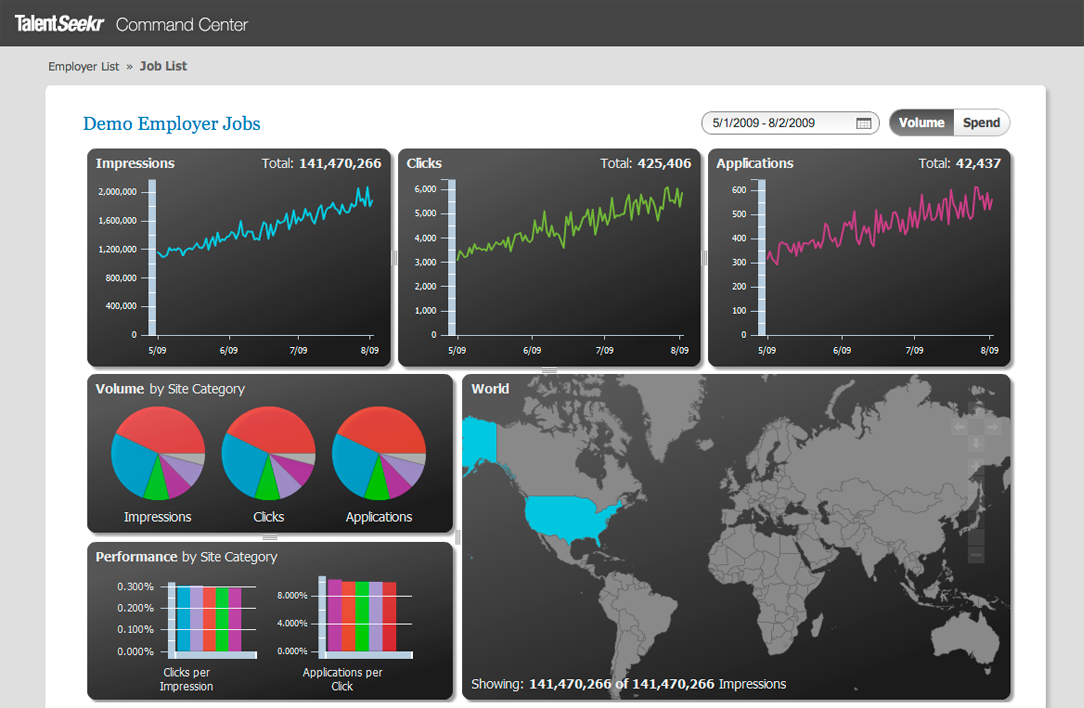
TS-CC-Employer-Dashboard

Even though unemployment is at the highest levels in a decade, companies are still finding it difficult to find the best qualified candidates to fill the positions that are available. The reason for that is because more often than not, the best qualified candidates are already employed and not necessarily looking for new jobs. Certainly not on job boards like Monster.com or HotJobs. So if the best candidates won’t seek out job openings on employment sites, the jobs need to seek them out.


That is the idea behind TalentSeekr, which is essentially an ad network for jobs. Companies fill out what jobs they are trying to fill in what locations, then TalentSeekr creates and tests multiple ads across the Web—social networks, blogs, forums, search engines, you name it. Based on the response rate and quality of the applicants that come through the ads, TalentSeekr optimizes the mix of ad types (banner, text, video, creative elements) and placement. (Watch the video below to see how it works). If more qualified applicants are coming in through LinkedIn than Facebook, it readjusts the mix. (In fact, LinkedIn makes a lot of money through recruitment ads on its own site in much the same manner. TalentSeeker is attempting to apply the same principles in a more distributed manner across the Web).

“What we are doing is what job boards did to newspapers. Everybody knows the space is about to shift big,” says Ryan Caldwell, the CEO of EnticeLabs, the company behind TalentSeekr. EnticeLabs was founded in August 2007, and funded with $1.3 million in angel money so far.  It’s been operating in a private beta until recently, and already counts among its customers Dell, GE, IBM, Adidas, Rebock, eBay, Google, and Microsoft. In addition to TalentSeekr, which is aimed at companies looking to recruit, EnticeLabs’ other product is CareerAds, which is aimed at blogs and Websites looking to display job-focused ads.

TalentSeekr’s approach takes longer than filling a job on Monster, but if you are looking for 3,000 SAP consultants, it could be a better approach.  If you are looking to just fill a single position quickly, you are probably still better off with Monster or some other job board.  Hiring managers get a dashboard (see screenshot below) which shows the number of ad impressions, clicks, and ultimate applications resulting from the ads, as well as the geographic distribution. The average clickthrough rates for TalentSeekre ads can range from 0.15 percent to 0.37 percent (see table below).  Then among those who click, the application rate can be anywhere from 0.22 percent for medical jobs to 2.68 percent for tech jobs.  But with an average cost-per-click of around $1, and an average cost per qualified applicant of anywhere from $200 to $2,600, it still beats hiring a headhunter.


Job ad networks have been tried before by both large companies (Monster has its Career Ad Network) and small. A Y Combinator company called SnapTalent tried this before shifting over to career fairs, and ultimately deadpooling (their site is no longer online). Caldwell isn’t worried about the same fate happening to EnticeLabs because he’s gone after big enterprise with thousands of employees first, rather than the other way around. “This is not something where you can do a cute little startup,” he says, “you need scale.”

The other thing that gives him confidence is that big employers like IBM and GE are talking about shifting large online recruiting budgets away from poorly-performing job boards. Since TalentSeekr already tracks the performance of its ads, it can also plug into applicant tracking systems used by HR departments to get feedback into how the people hired end up doing in terms of job evaluations, longevity and other factors.


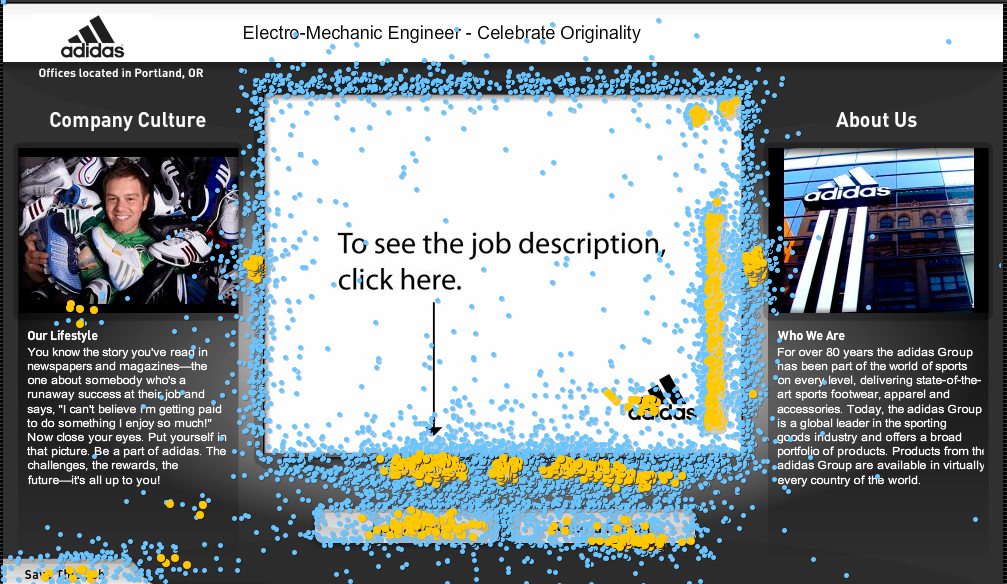
TS-CC-HeatMap

Tough Job Search? Ask Yourself These 5 Questions!

Original Post: Tough Job Search? Ask Yourself These 5 Questions!


image Is your job search taking longer than expected? Most are right now. Certainly the difficult job market is making things harder. However, a great number of people could speed up the process by asking themselves five critical questions.
Take time, think them through, be honest, and your job search may improve dramatically!

  1. What makes me unique? Companies are seeing dozens or hundreds of resumes for each opening. They interview several people as well. It doesn’t take long for things to seem like everyone is the same. If you can’t communicate in your resume and in your interview what makes you different, and more valuable to the company than every other candidate they see, you will be an ‘also ran’. Take assessment tests, ask friends, family and previous co-workers, and do a self-evaluation to figure out what you offer that others don’t. EVERYONE has assets and ‘uniqueness’. Discover yours and learn how to communicate it well.

  2. What am I looking for? Many job seekers are too wishy-washy in their objectives. They only know that they need a new job, but aren’t clear on exactly what it is they are seeking. Using the same process to discover what makes you unique, narrow down your search to the type of job or career you want. When you are networking, people can’t help if they don’t know what you want. Have a clear target, and learn to communicate it effectively. You can find more help here.

  3. How am I spending my time? Nearly everyone has heard the cliche’ that “Looking for a job is a full-time job in itself.” However, most people don’t put nearly the time or effort into their job search that is required. It’s difficult sometimes to know what to do. However, if you diligently plan your work each week, and work your plan, you will be far more productive than all of a sudden trying to figure out what to do next on a Tuesday afternoon. You can get additional guidance here, here, and here.

  4. What’s my attitude like? Your attitude is one of the most critical aspects of your job search. If you are sincerely optimistic, and upbeat, you are a much more attractive candidate and you will approach your search in a positive way. If you are bitter, discouraged, defeated, or just crabby, your ability to land that next job drops dramatically. Attitude is critical! Be sure to read: The ONE Best Thing You Can Do For Your Job Search.

  5. How well do I present myself? The way you present yourself to networking contacts, recruiters, and potential recruiters is critical to your success in landing a job. That presentation is a composite of professional appearance, effective communication, attitude, and being prepared. You have to be qualified to do the work, but they are most likely talking to several people that are qualified. Presentation makes the difference between who gets hired and who doesn’t. Spend time to work on your presentation and you will see better results. You can find pointers here, and here.
Do the self evaluation, and make the effort to make changes where necessary. You will find they will make difference in your search and give you a great deal more confidence as well!


"

A Confession: I Network Because I Have To

Original Post: A Confession: I Network Because I Have To


image by Sagar Patil

The Loneliness of Enduring a Change


I met an old friend for lunch today. She was talking about making a big change in her life, and we were talking about how scary that whole process is. We talked a long time about the sort of ups and downs you go through when you make big changes like that – the fear of being alienated, of making the wrong choices, of not knowing exactly what to do, but more importantly – doing it alone.

Making these big changes in our lives, as we were brought up to value stable jobs and live comfortably, is akin to abandoning our roots, values, and partly, the security of the family community. While this isn’t ostracism, the abandonment comes from a lack of understanding – family and friends just don’t know what in the world we’re getting into and can’t give us the guidance, mentorship and support we really need. It’s not that they won’t – they just can’t.

And it’s just not about money or a place to stay. It big hurdle about surviving a change is the rite of passage that you need to go through to get started, establish yourself in a new place, and finally succeed.

Change Hurts


When I made a decision to leave a comfortable life in Malaysia, I got really depressed and my wife had to push me to get the visa done because I did not have the energy to do it myself. It was depressing selling away all the IKEA furniture that I painstakingly and lovingly bought and put together, some not even a year old. The worst was seeing the lovely Edefors oak table being draped by my wife’s grandmother with a plastic tablecloth to “protect” it – a very Asian thing.

Needless to say, it was sad to see my friends and family for the last time. I wasn’t sure how to react – how do you put on a face in front of some of your closest mates and tell them you’re leaving for good? Everything had to be done fast so I didn’t have time. What time I had, we just spent like good old days having meals and good laughs. Through all this, we had our visa turned down once and my wife and I had several arguments in the heat of anxiety. It wasn’t the best of times.

Yes, once the apartment and furniture was sold off, a big burden had lifted off. We were elated when my course acceptance came in the mail in the nick of time. We knew we had friends and relatives in London who were welcoming us with open arms. We knew and loved the city. I was excited about the course, and the possibilities. We felt God’s peace and felt that it was the right thing to do. But it was still a painful process – I have the memories of those things we went through, a testament of our journey.

I Network out of the Need to Survive


At times like these, real and authentic relationships were the only thing that got me back up and running. I could’ve said we survived on dreams and inspirations, or on the timely opportunities of job offers, or on the creature comforts like having our own accommodation. But friendships and precious encounters I’ve had from meeting like-minded people – people who share the same vision and goal – are the sorts of things that plant my feet firmly here in London: family, friends, coursemates, new friends I’ve met from the industry, colleagues.

Thinking back – these relationships didn’t just fall into my lap. Some relationships happened only because I went out and searched for it. Some took a lot more effort and time. But I knew that I needed it in order to survive. And that’s what change does to you.

Change forces you to take hold of what you need most in order to survive for the long run. It’s like being stranded on an island and re-learning the fundamentals all over again – what it really means to live. I don’t simply talk about the people I’ve met and how things “worked out” for me – as though others should try networking like it was putting on a new pair of jeans. These people mean much more to me than just opportunities.

You can tell yourself all you want about how inauthentic networking can be and how artificial that whole experience feels. Or, you can tell yourself that it sucks being alone with your ideas and that you need genuine relationships and genuine conversations over things that you really do care about.

For me, I did it because I knew no other way.

We Want Jobs, Not Trophies

Original Post: We Want Jobs, Not Trophies


If you think the recession is over and jobs are everywhere, you need to think again. As if the class of 2009 didn’t have a hard enough time finding a job, predictions for 2010 are just as bleak. According to the National Association of Colleges and Employers (and via Culpwrit), U.S. employers plan to hire 7 percent fewer college graduates than the class of 2009.

Crap.

From my own personal observations, there have been several unique things happening to the public relations industry. Although PR budgets have been relatively more stable than in advertising, there still have been some jobs lost. Additionally, the entry level is increasingly difficult for college graduates to break into. I think this is happening for two reasons. First, more people are willing to take a lower level job than be totally unemployed; AAE jobs are being filed by folks with 3-5 years of experience and internships have an unofficial prerequisite of many previous experiences. Second, with all the journalists losing their jobs, many attempt to jump into public relations, thus leaving fewer jobs for public relations practitioners.

So what about us Gen Y folk? I don’t know about you, but I’d like a job when I graduate. That’s why Come Recommended is so sweet; they’re advocating for all of us by demanding equal opportunity employment for Gen Y. Here are some pretty interesting stats about our generation that should make you worry:


  • Unemployment for people age 16-24 is nine points higher than the national average
  • Typical full-time workers age 25-34 are making less than workers that age a generation ago
  • Middle-management jobs have been reduced, so it is harder to move up the corporate ladder
  • The 1-24 age group represents 15 percent of the labor force AND one-third of the unemployed
  • The average student graduates with twice as much debt, yet the economy has fewer opportunities

Times are definitely changing, and it appears that it is not in favor of Gen Y at all. However, I know our generation has so much untapped potential. Our generation is changing the way we all communicate, entrepreneurship is more prevalent in our minds than ever and we are overcoming numerous challenges.

This is where we all come in. Start by checking out the We Want Jobs Not Trophies Web site. There is a lot of information on there on how to get involved with the campaign and begin advocating for the rest of your generation. Also on the site is a toolkit section that gives you the opportunity to run the campaign at the local level. This is a great opportunity for you to get some public relations experience while doing something that will help you in the long run.

Thanks to Heather Huhman and her team over at Come Recommended for leading this. We all can benefit from advocating for our generation, so I encourage you to check out the campaign.

Also, Come Recommended has some great virtual internships. The deadline is coming up for next semester, so be sure to check them out.